Territorial collaboration toolkit
COLLABORATION TOOLSCircular and regenerative bioeconomy pathways are built through collaboration as much as through technology. This toolkit helps Living Labs, territorial partnerships and emerging Shared Agendas work through the conversations that turn local knowledge into coordinated action: understanding a functional territory, recognising assets and constraints, involving the right people, developing a shared direction, and organising delivery.
The templates are facilitation aids. Adapt them to the local context, combine them with evidence and technical expertise, and treat their outputs as working inputs for collective decisions — not as substitutes for feasibility studies, legal or regulatory review, environmental assessment, or formal governance approval.
Start from local conditions
Use the diagnostic templates to make challenges, assets, feedstock conditions and future uncertainty visible before deciding what pathway to pursue.
Create a basis for collaboration
Develop a working Shared Agenda, a shared future direction and a balanced cohort of contributors who can take the work forward.
Move from discussion to delivery
Agree priorities, governance, risks, support needs and engagement arrangements. Review these choices as the partnership learns and conditions evolve.
1. Understand the territory
Create a shared reading of the functional territory: what matters, what is available, what is constrained and what may change. Use these outputs to define the questions that require further evidence.
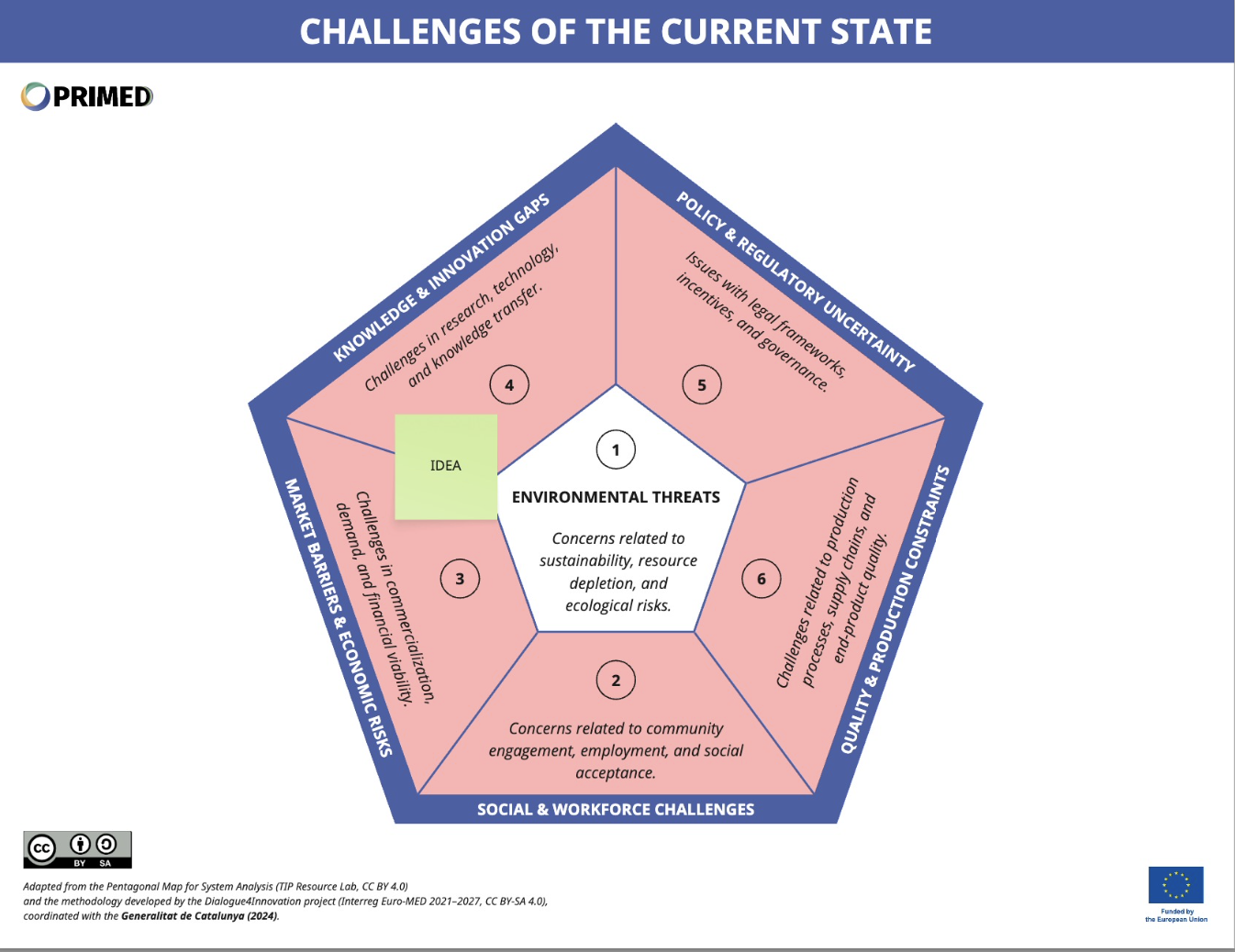
Challenges Canvas
Make barriers to circular and bio-based value-chain development visible. The canvas helps distinguish technical, economic, regulatory, logistical, social and organisational challenges, so the group can identify which issues require local action and which require external support.

- PRIMED 2025
- DOWNLOAD TEMPLATE
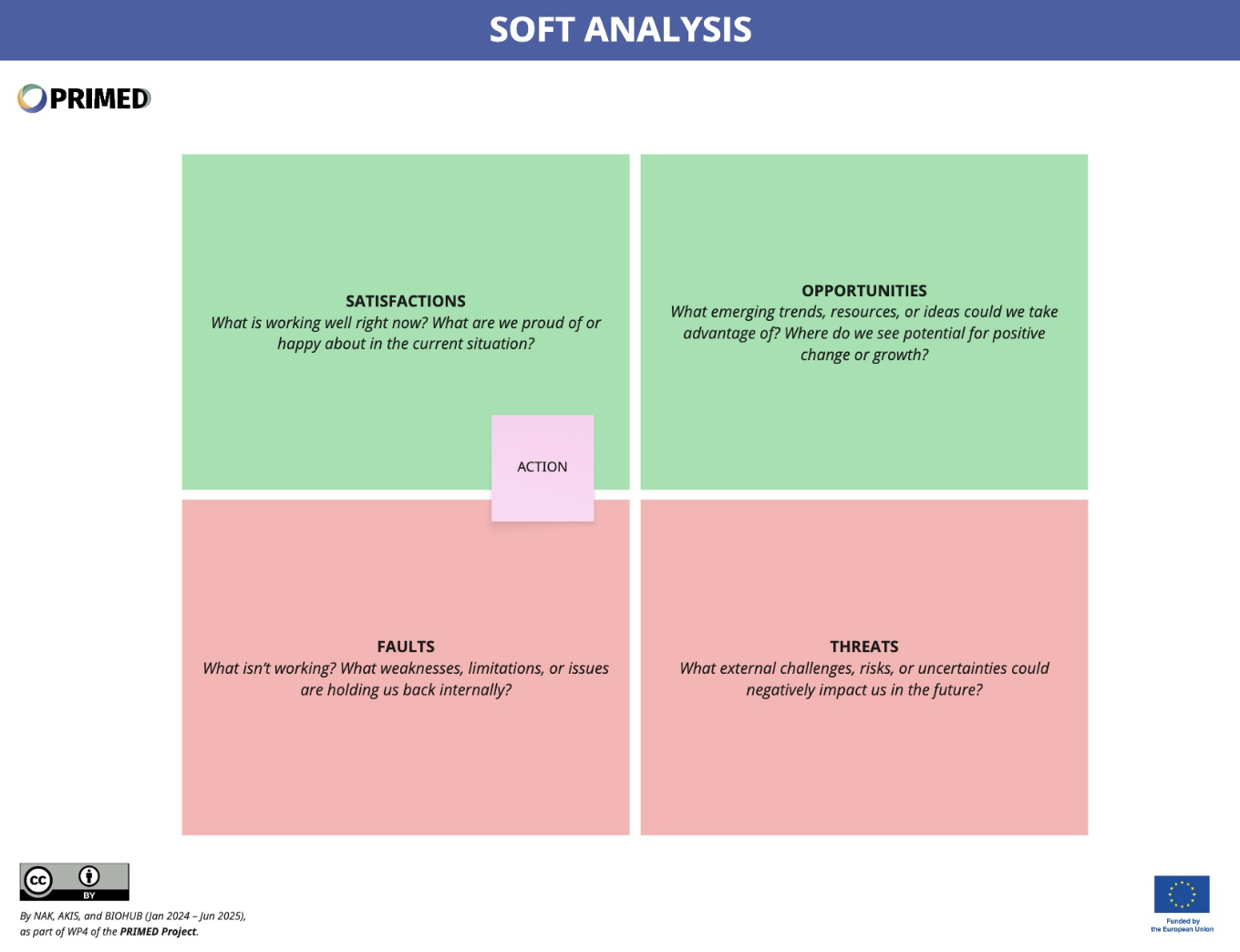
Territorial Context Scan
Capture qualitative knowledge about the territory — its strengths, weaknesses, opportunities, threats and key conditions. Use it alongside local data and other evidence; its output is a shared reading of the context, not a formal feasibility assessment.
- PRIMED 2025
- DOWNLOAD TEMPLATE
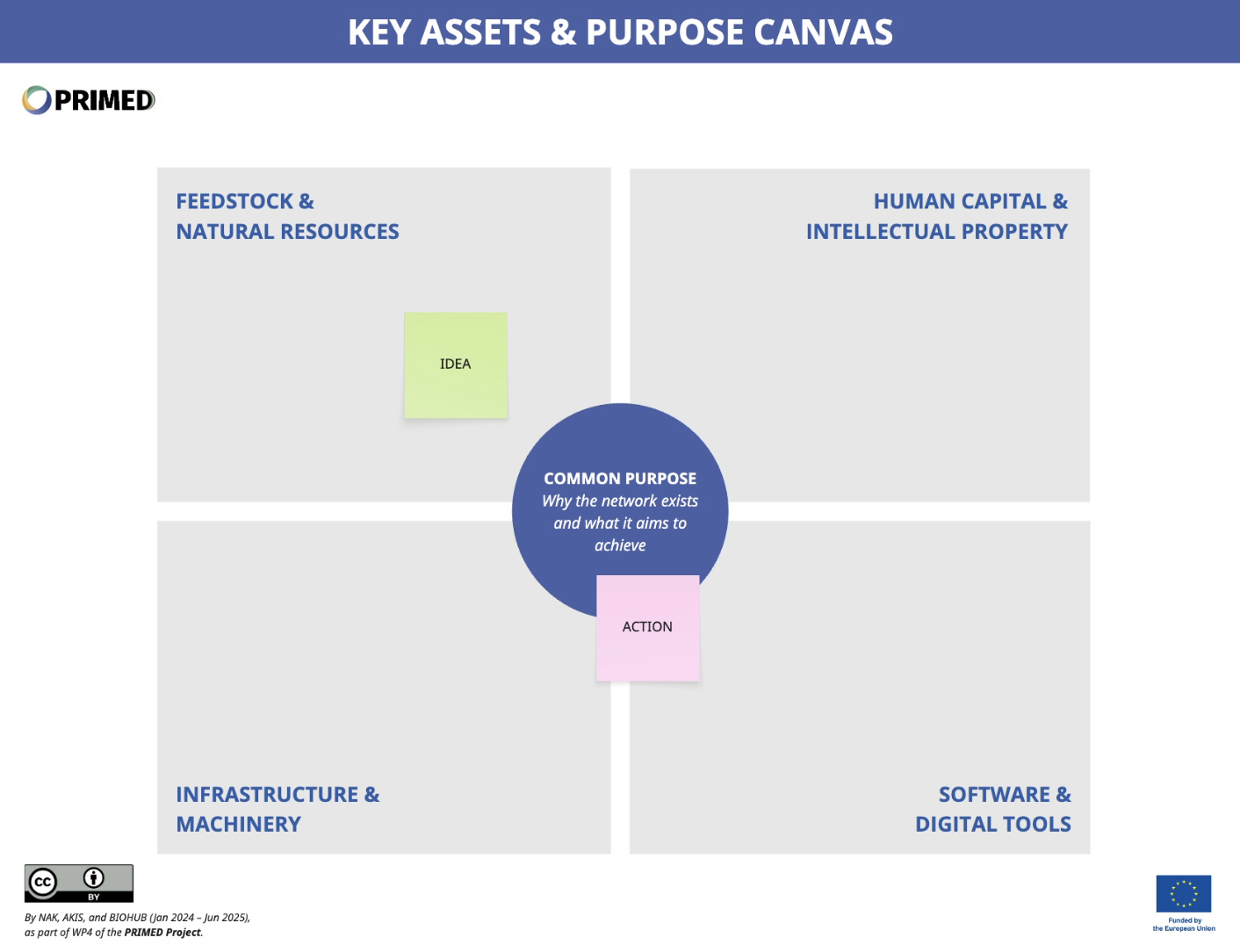
Key Assets & Collective Purpose
Identify bioresources, infrastructure, knowledge, networks and other assets that can support a Shared Agenda, while clarifying the purpose that connects them. It helps groups avoid starting with a technology or product before understanding local capacity and intent.
- PRIMED 2025
- DOWNLOAD TEMPLATE
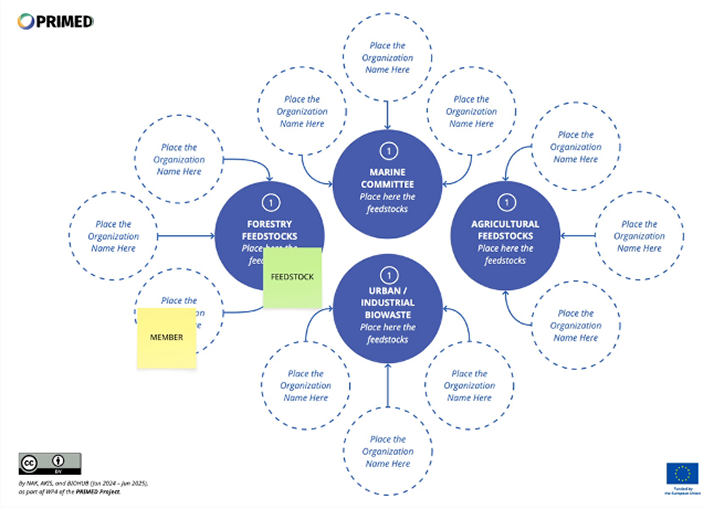
Feedstock Origins & Stewardship Canvas
Map the origin, seasonality, availability, quality requirements, ownership and stewardship of biomass inputs. Use it to discuss traceability and fair, environmentally responsible sourcing before assuming that a feedstock can support a value chain.
- PRIMED 2025
- DOWNLOAD TEMPLATE
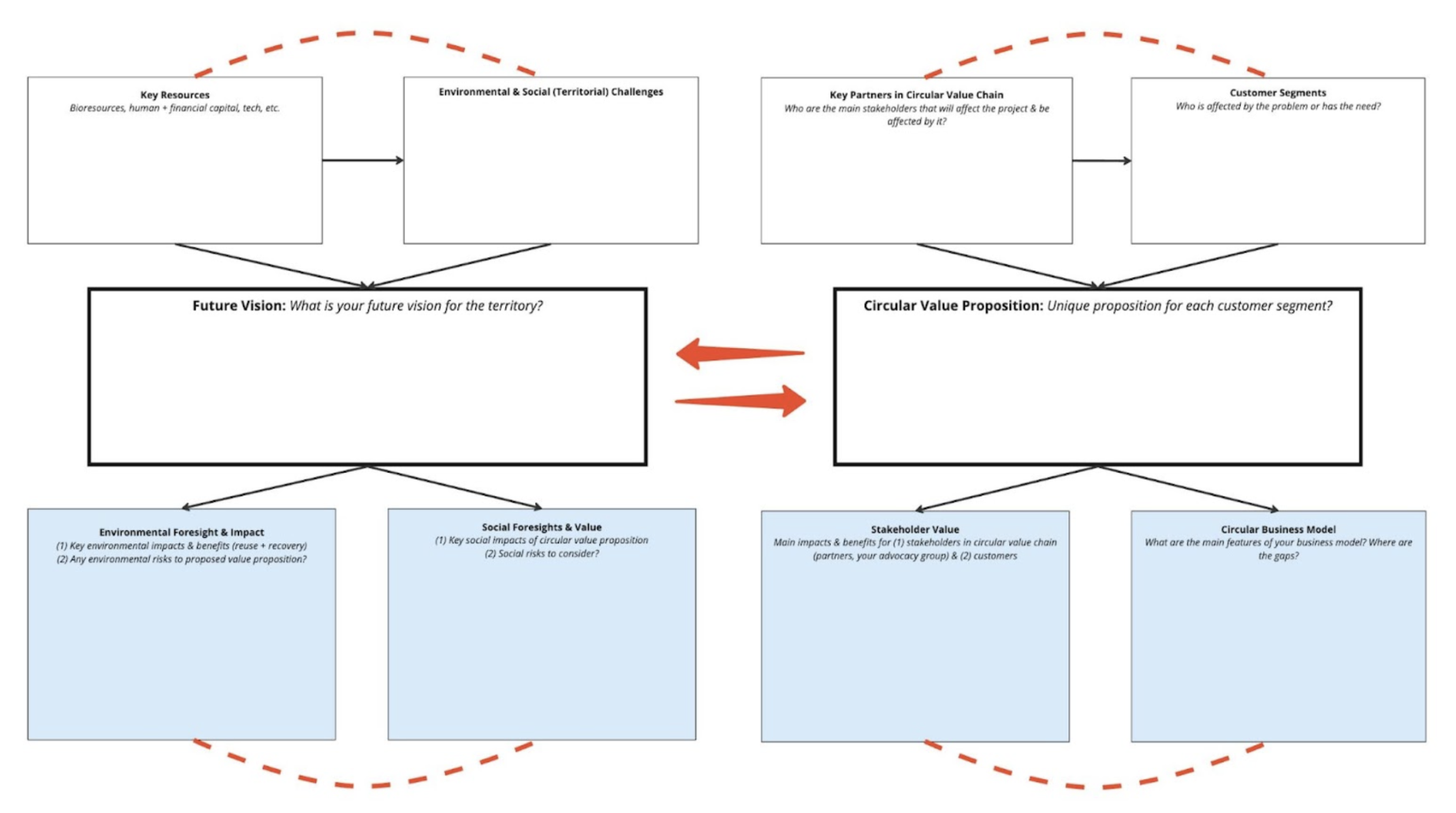
Future Scenario Canvas
Explore plausible future conditions affecting a territory — such as feedstock availability, markets, policy, infrastructure or social acceptance — and discuss their implications for a possible pathway. It is not a forecast; it is a structured way to prepare for uncertainty and develop options.
- PRIMED 2025
- DOWNLOAD TEMPLATE
2. Build shared direction
Bring relevant actors together around a common purpose and future direction. These templates help the partnership establish an initial Shared Agenda and a balanced working cohort.
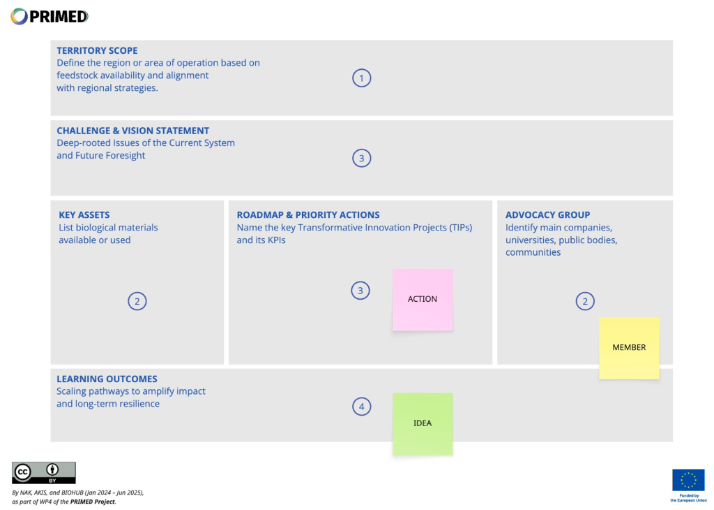
Shared Agenda Canvas
Bring a territorial partnership around one working frame. Use this canvas to connect shared challenges, opportunities, assets, alliances, future direction and the conditions required to act. It produces a draft Shared Agenda that should be tested, refined and owned by the people and organisations involved.
- PRIMED 2025
- DOWNLOAD TEMPLATE
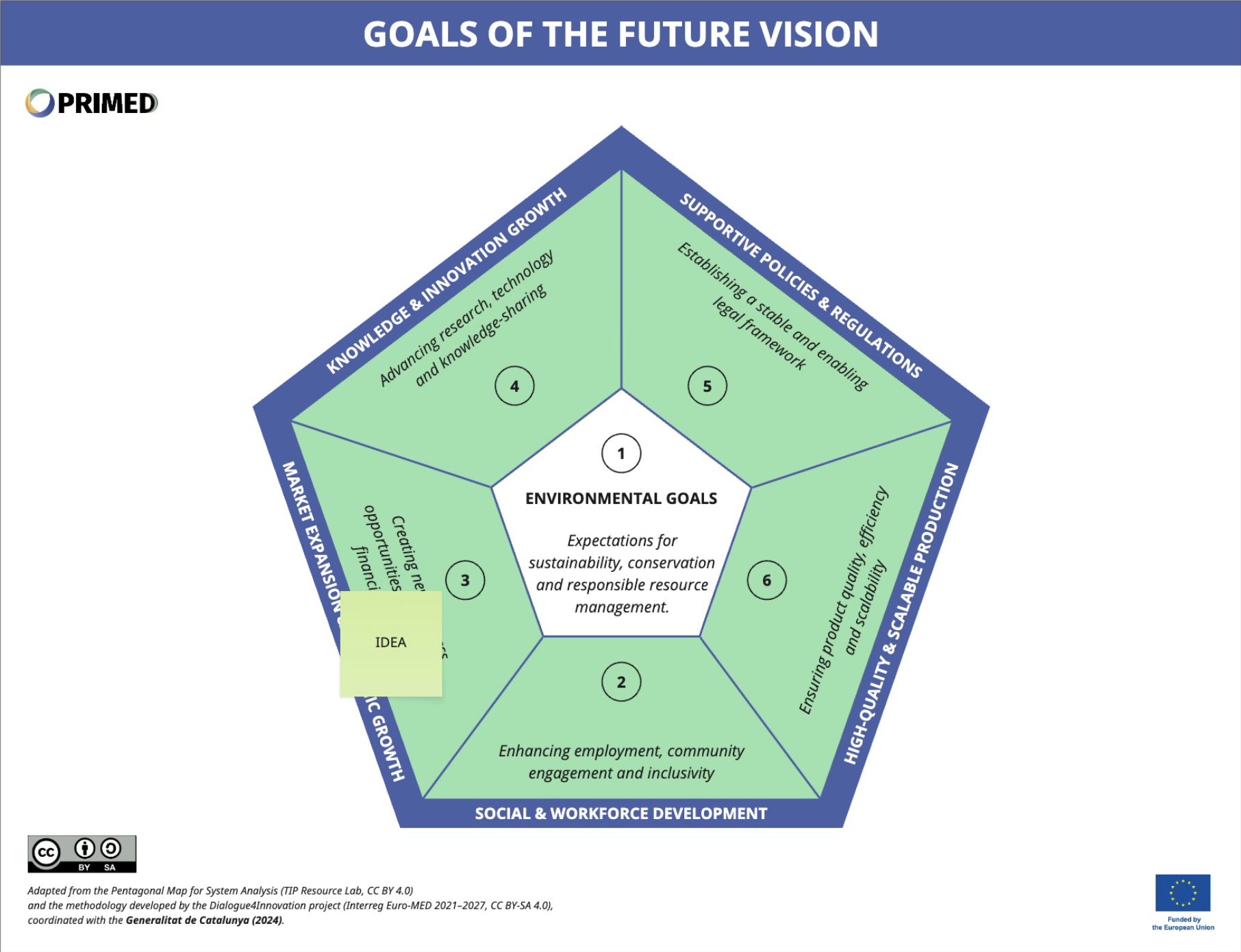
Shared Future Vision
Create a credible and motivating description of the future the partnership wants to work towards. Use it to surface different expectations, find common ground and set direction before choices about projects, investment or governance are made.
- PRIMED 2025
- DOWNLOAD TEMPLATE
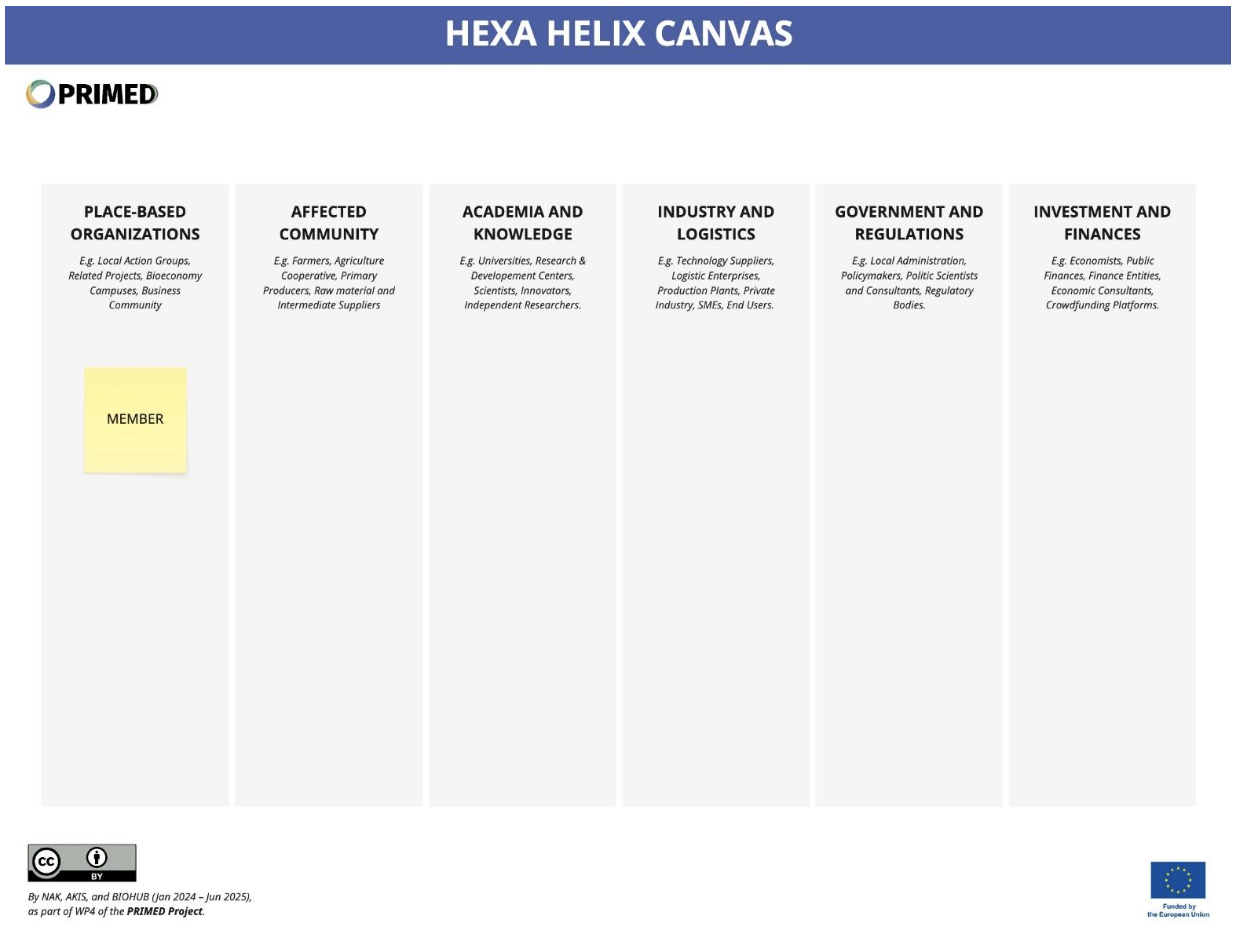
Hexa-Helix Cohort Mapping
Identify a balanced working cohort across citizens and communities, academia, industry, government, finance and the environment. Map each actor’s role, interest and potential contribution, then update the cohort as the Shared Agenda develops.
- PRIMED 2025
- DOWNLOAD TEMPLATE
3. Organise action and governance
Translate shared direction into priorities, coordination arrangements, a practical roadmap and a clearer picture of risks and support needs.
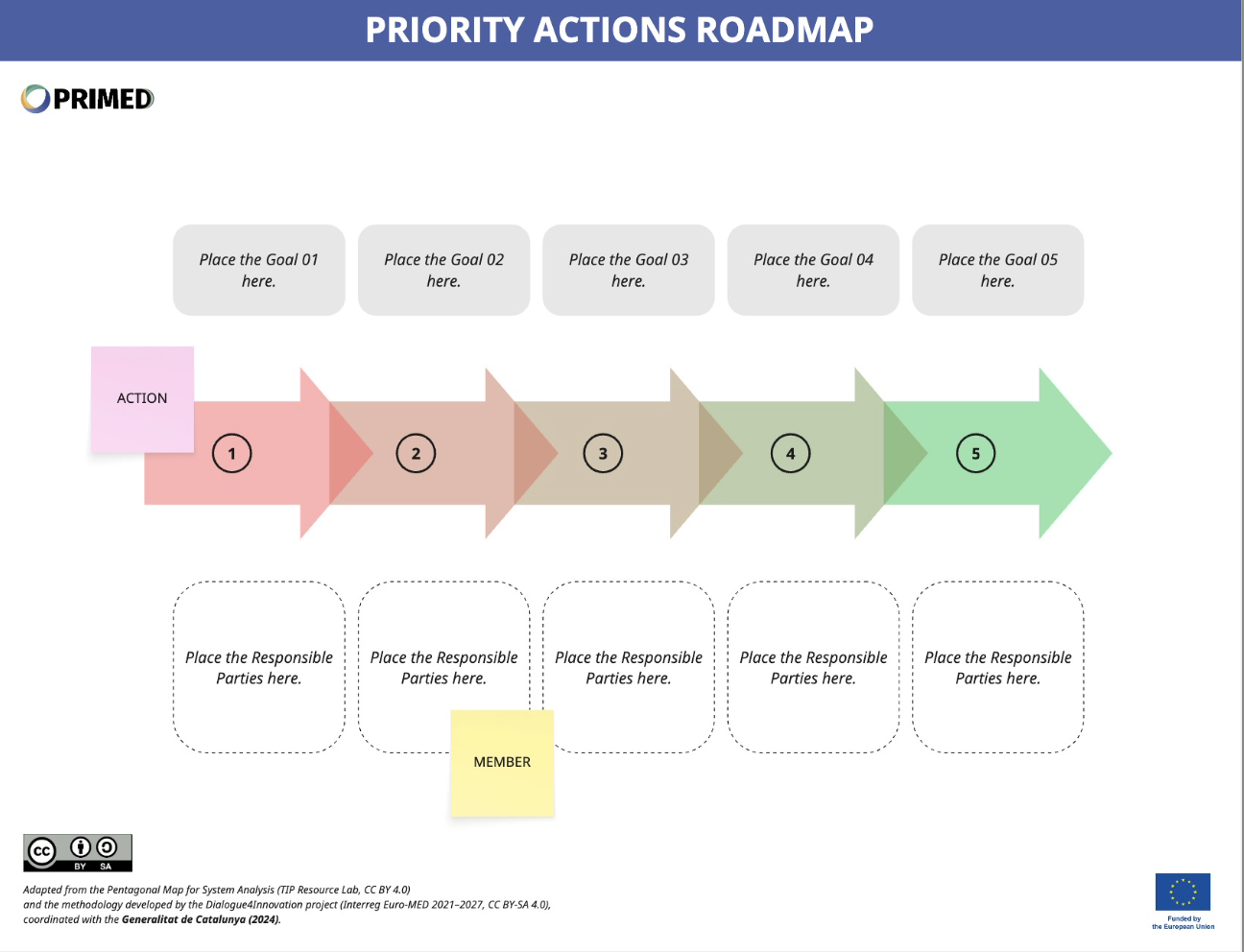
Action Roadmap
Turn agreed priorities into an actionable route: activities, milestones, owners, dependencies and review points. Use it to coordinate short-, medium- and long-term work, then revisit it as evidence, partners and conditions change.
- PRIMED 2025
- DOWNLOAD TEMPLATE
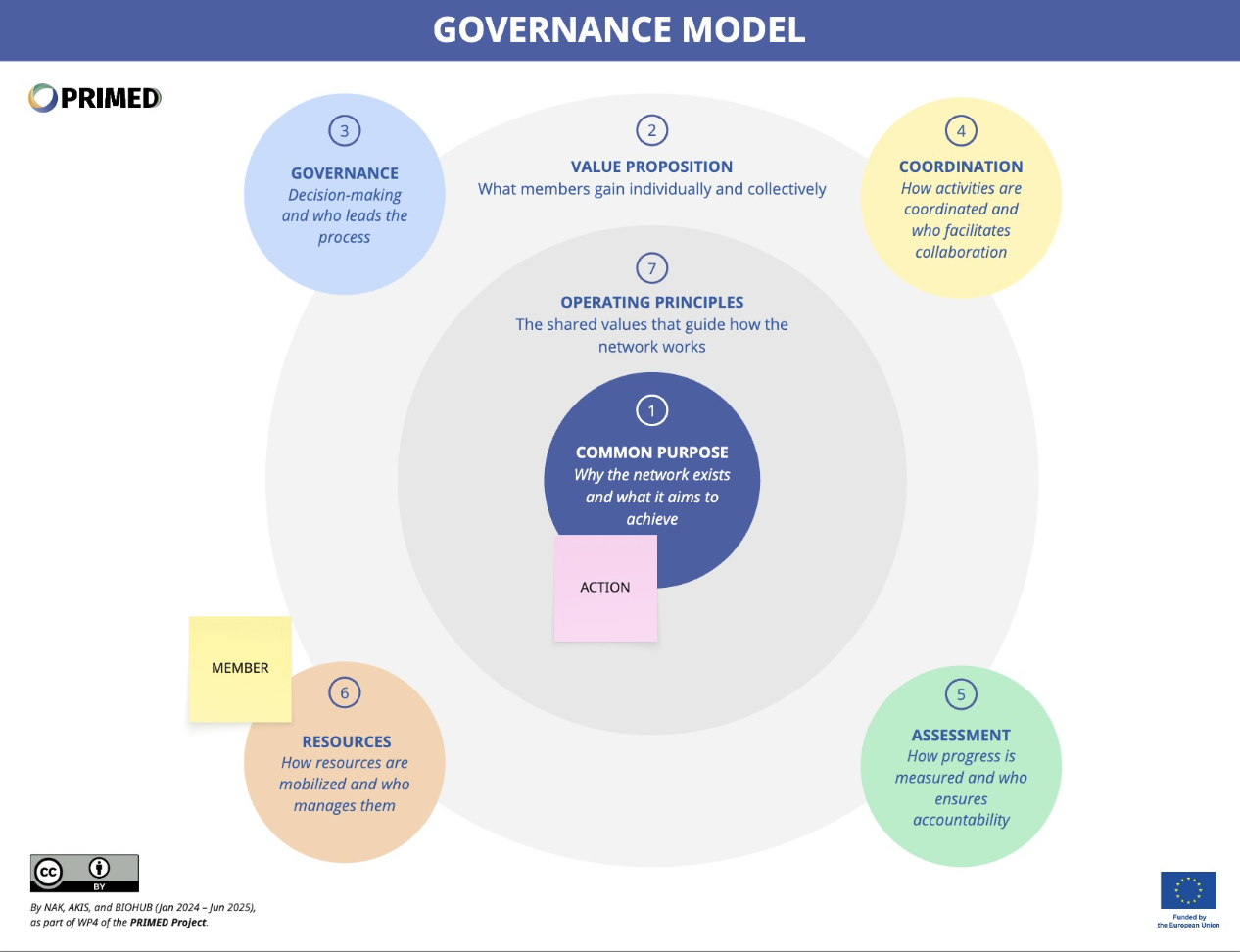
Collaboration & Governance Model
Design how a partnership will work: its purpose, roles, decision rights, participation, accountability and coordination. It structures the conversation, but any formal governance arrangement must be agreed and confirmed by the organisations involved.
- PRIMED 2025
- DOWNLOAD TEMPLATE
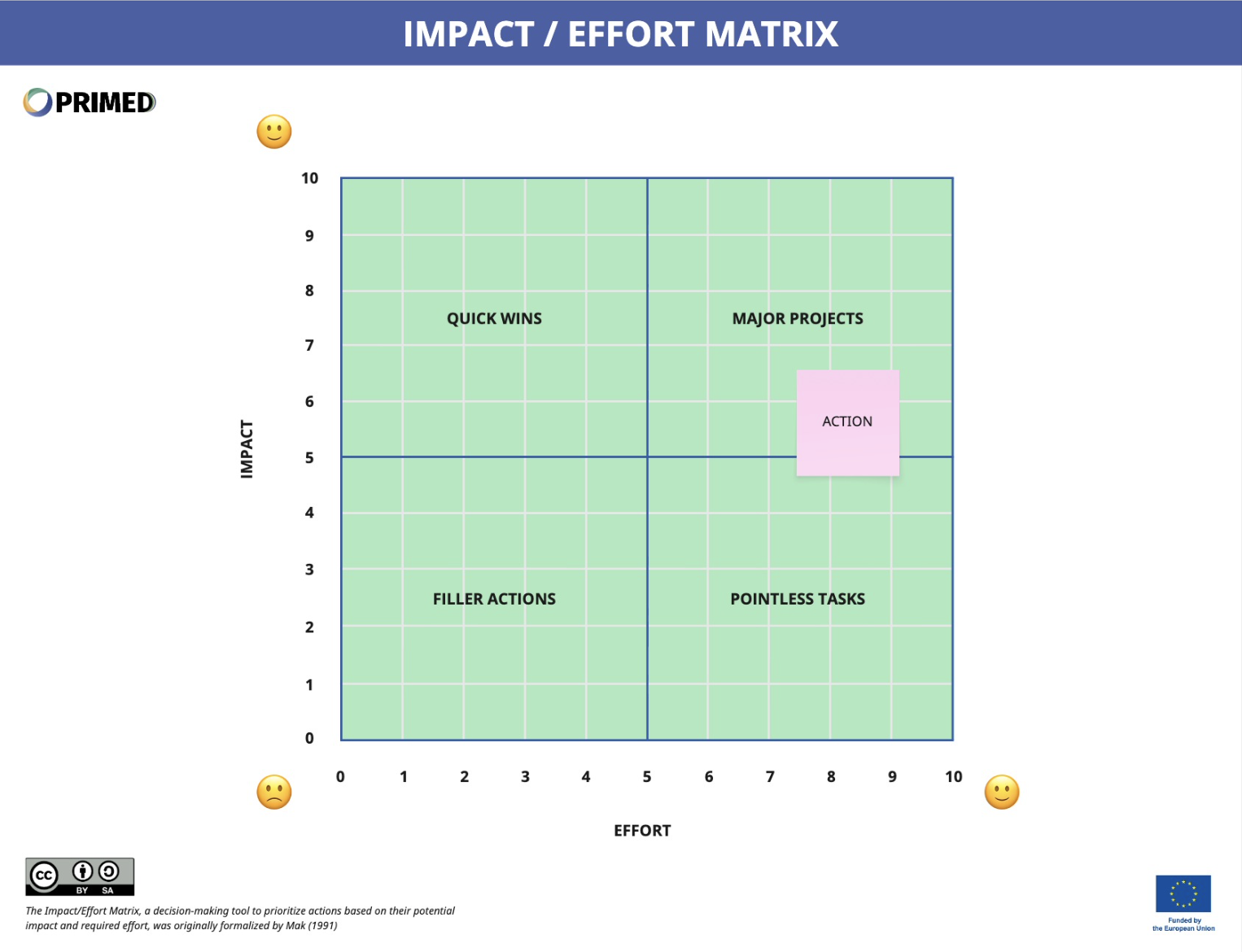
Impact–Effort Prioritisation
Compare possible actions by their expected contribution and the effort required. Use it to support a transparent prioritisation discussion and to balance early steps with longer-term change. The scores are a facilitation input, not a prediction of impact.
- PRIMED 2025
- DOWNLOAD TEMPLATE
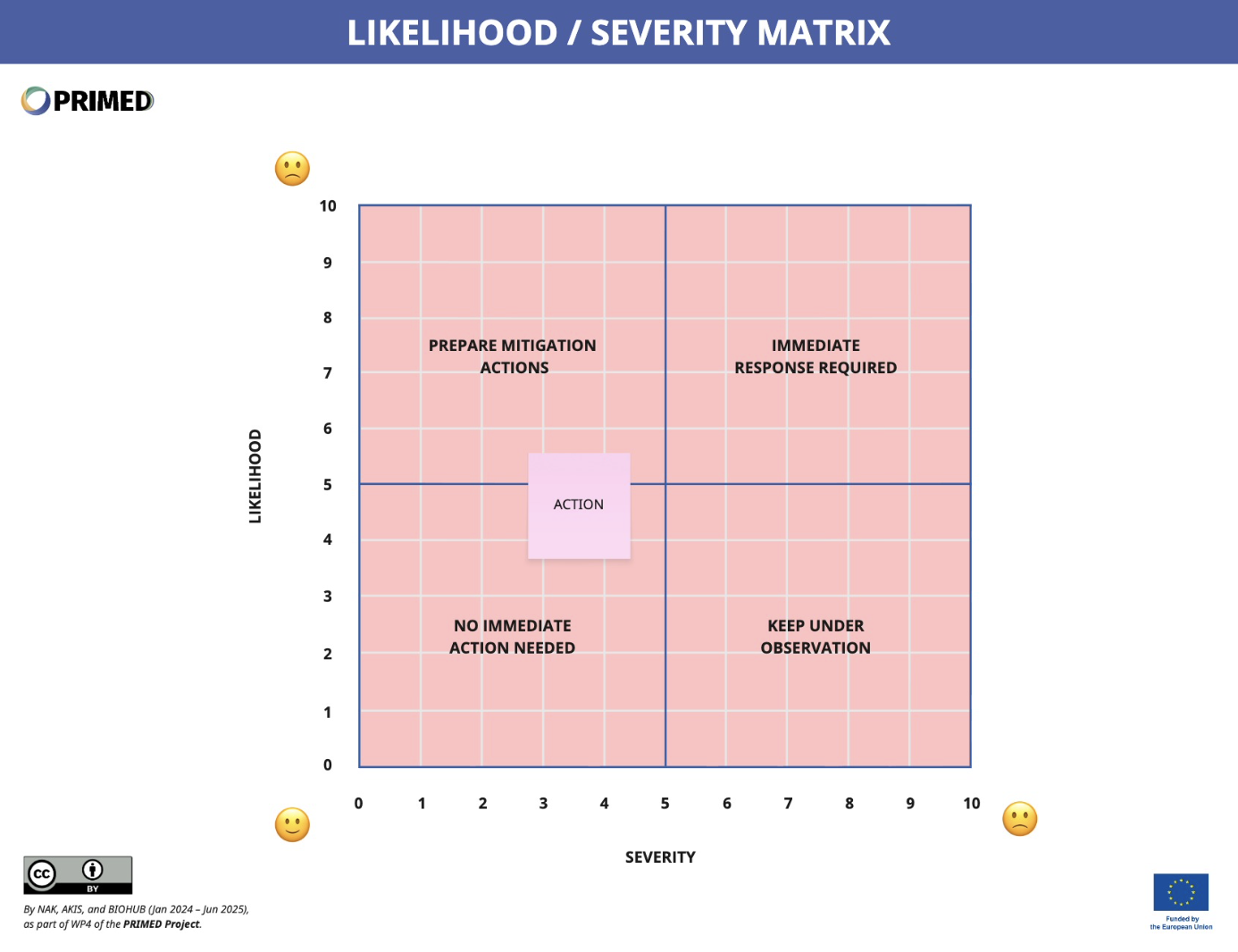
Likelihood–Severity Risk Matrix
Identify uncertainties, estimate their likelihood and severity, and agree actions to monitor, reduce or prepare for them. Use it to make risk visible while keeping assumptions, evidence and responsibilities clear.
- PRIMED 2025
- DOWNLOAD TEMPLATE
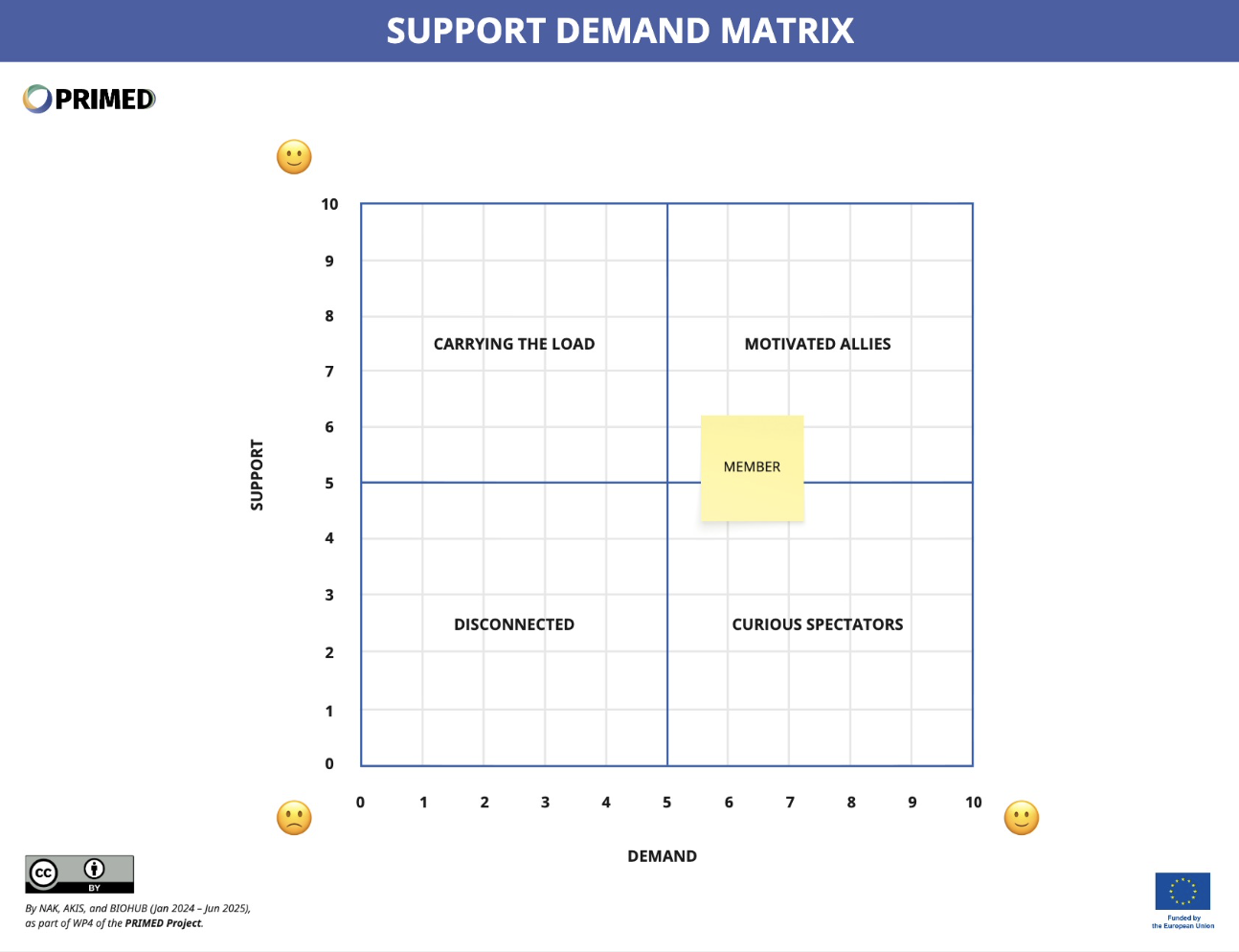
Support Demand Canvas
Convert a broad need for help into specific requests: what support is needed, by whom, for what purpose, by when and under what conditions. It can inform conversations with funders, support programmes, public authorities and technical providers.
- PRIMED 2025
- DOWNLOAD TEMPLATE
4. Engage the wider ecosystem
Plan relationships with the people and organisations that influence, contribute to or are affected by the pathway. Match the type of engagement to each actor’s role and level of interest.
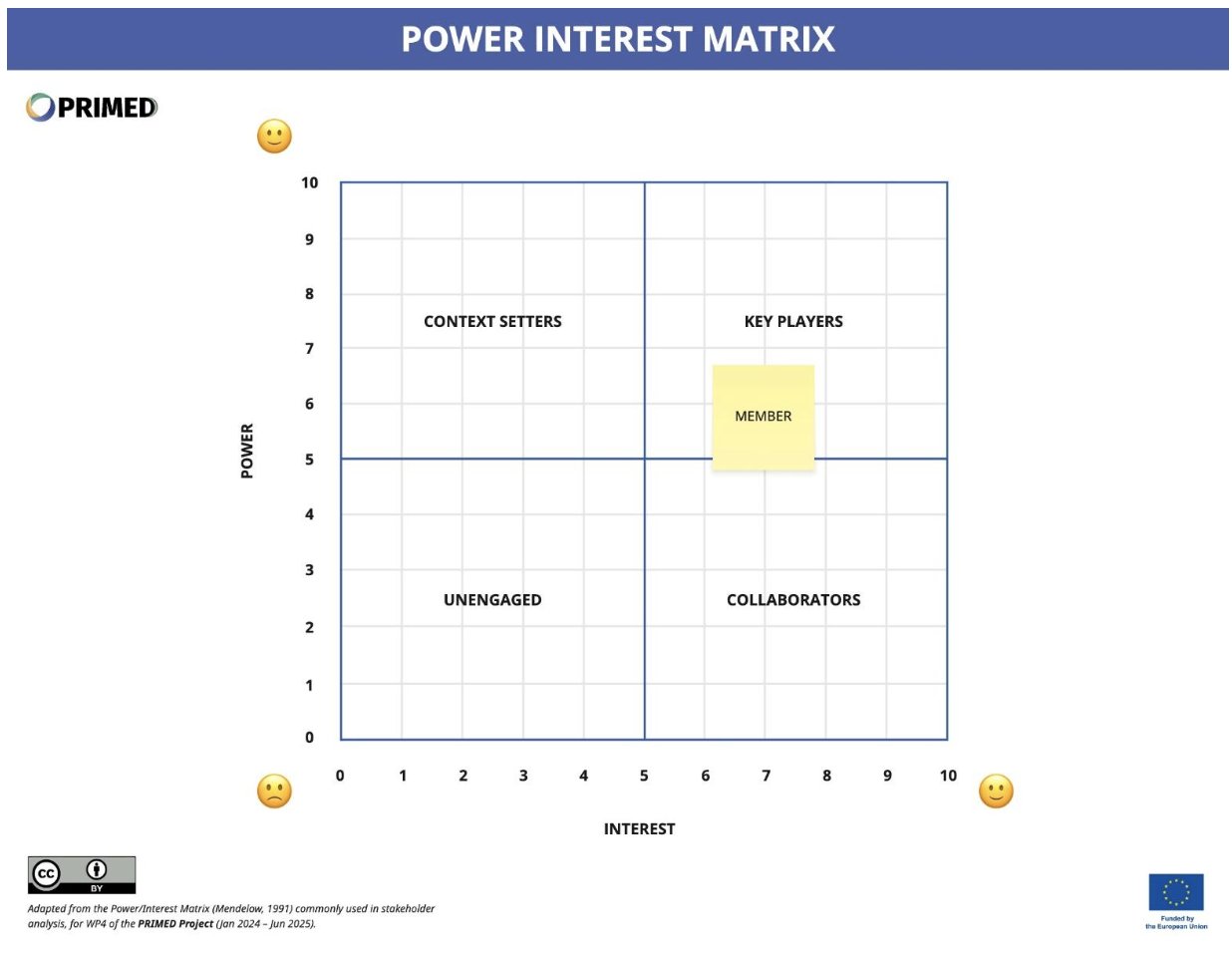
Power–Interest Matrix
Assess the influence and interest of actors around a pathway or Shared Agenda. Use it to agree a proportionate engagement approach: actively involve, collaborate, consult, keep informed or monitor.
- PRIMED 2025
- DOWNLOAD TEMPLATE
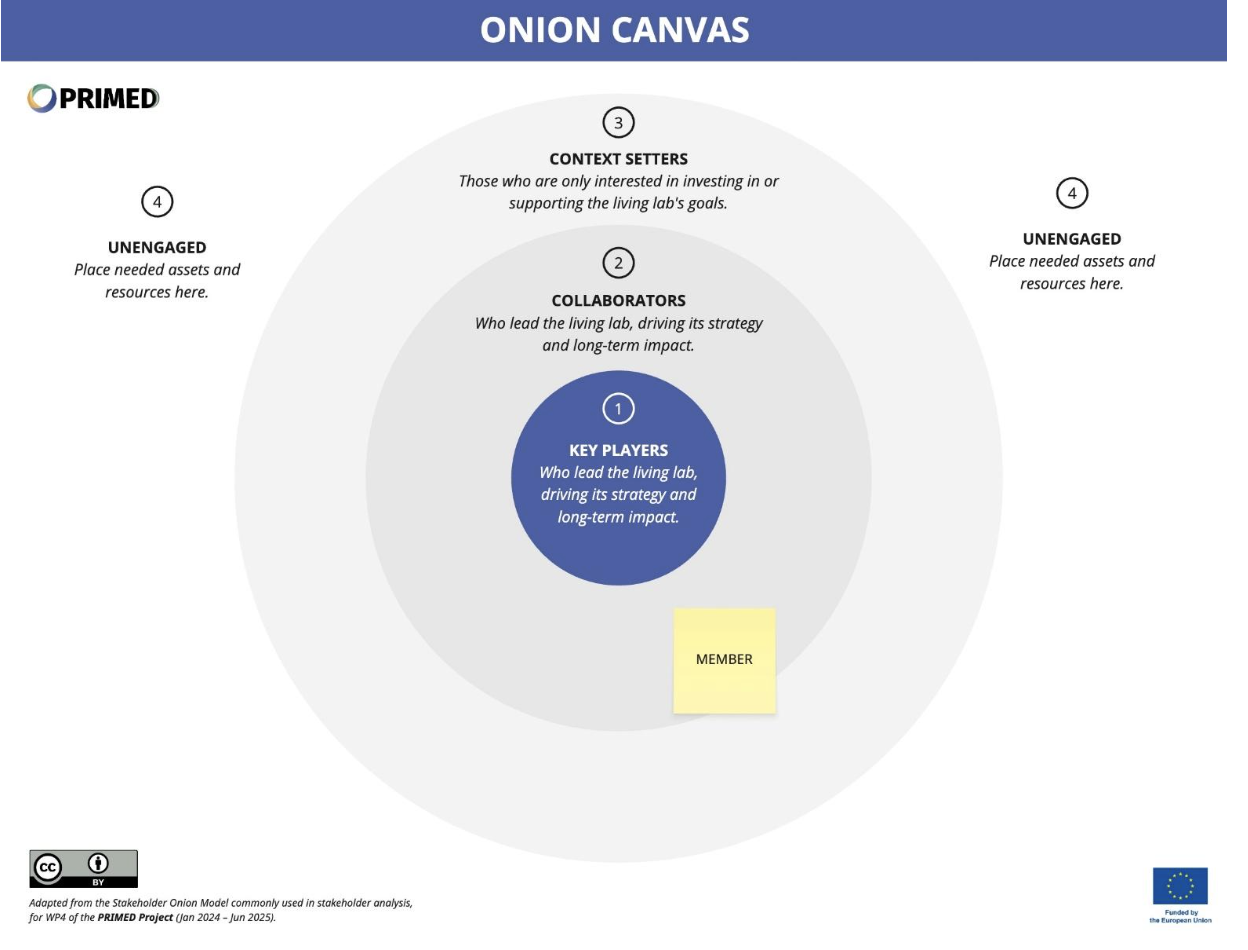
Stakeholder Engagement Onion Canvas
Visualise the relationship between the core team and wider stakeholder groups. Use it to decide who needs to co-design, advise, validate, be consulted or simply be informed at each stage of the work.
- PRIMED 2025
- DOWNLOAD TEMPLATE